

Articles about temperance seem to be constant as of late. To see for yourself, do an online search about drinking alcohol. All the articles focus on the effects of drinking alcohol on health. But I will try to add perspective to the dire warnings. However, no new facts are presented in the latest articles, just more of the same.
I subscribe to news aggregating services, specifically concerning craft beer and beverage alcohol. About a year ago I started noticing frequent articles/press releases about the health issues of consuming alcohol. Some researchers go as far as to say drinking any amount of alcohol is harmful to health. For decades the National Institute on Alcohol Abuse and Alcoholism (NIAA) had an established guideline stating, “According to the Dietary Guidelines for Americans 2020-2025, adults of legal drinking age can choose not to drink or to limit their intake to two drinks or less in a day for men and one drink or less in a day for women, when alcohol is consumed. Drinking less is better …” Understand, many countries have different prescribed limit levels, so what is the difference between American adult health and say adults in the UK?
The Lancet reported, “No level of alcohol consumption is safe when it comes to human health, according to a WHO statement released in January 2023.” Is it just a matter of time before a new researcher, with a “cause” in mind, can develop new research to render prior studies they find troubling in support of their study? In essence, heaping on study findings is really about repetitive information.
The point I am trying to illustrate is that the prior drinks per day limit is now “No” drinks. Is all research findings “science”? Here is a recent case in point. COVID proved that the statement “because I am the science” can be shaky grounds for building regulations upon. That statement came from a highly respected scientist when testifying before Congress in 2021 about the rules initiated for public health during the pandemic. So much for research.
Wine may have been the first category that took a direct hit from the temperance movement a few years ago. In 1991 the French Paradox study on the health benefits of red wine on the circulatory system was widely reported in the US and Europe. The father of this research was Serge Renaud who was an acclaimed researcher and scientist in France. Then in 2023, another research paper reported that red wine has no cardio system benefits, thus contradicting prior research.
Now, a more recent study from Barcelona University states,” The study found particularly strong associations between moderate wine consumption and reduced risk of heart attacks. This relationship was especially noticeable in men and participants with diabetes, though the researchers noted that women showed similar trends, albeit with less statistical significance.” So, what is the correct answer? Are we getting confused with changing facts?
One last comment and I will move on to craft beer. Dr. Laura Catena, MD, trained at Stanford University, wrote a reply to the most recent research about the detrimental effects of beverage alcohol on health. Here is the summary paragraph from her reply about the research. “But while there is a clear consensus that heavy and binge drinking are very harmful, a group of scientists, some of whom have received funding from temperance organizations, are making blanket statements, such as the one released by the World Health Organization (WHO) in January 2023 that “no level of alcohol consumption is safe” for our health. Such declarations fail to acknowledge the nuances in the data and dismiss decades of research in reputable journals showing cardiovascular protective effects for moderate drinkers,” Dr. Laura Catena, MD.
Indulge me one more time about the vagaries of research. Twenty years ago, it was a medical fact that coffee was bad for your health. A year ago, research came forward saying coffee was beneficial in reducing certain cancers and there was no harmful effect to drinking all the coffee you want. Again, this illustrates how needlessly disruptive research results can be when taken as a universal uncontested fact. One such study report on Dec 3, 2024, by Cátia Lopes and Rodrigo Cunha, Center for Neuroscience and Cell Biology in Portugal, authored the study.
Research can impact even the social fabric of a culture. The temperance movement in the UK is recognized now with the closing of many pubs due to restrictions, and taxes, and touting that closing of pubs will improve the functioning of communities and families.
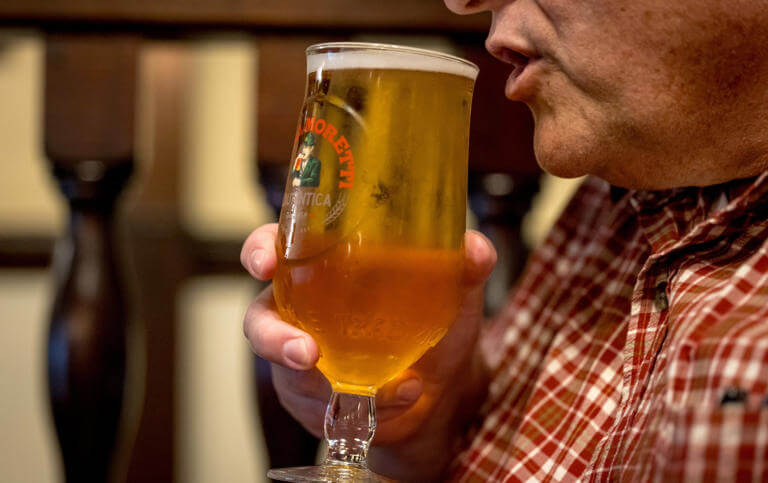
I am not a proponent that everyone should consume alcohol daily until they fall into a drunken stupor. I just want honest research and people to make their own decisions on health issues. My question about the craft beer sector: Why is the temperance movement being hailed as saving people from themselves over legal issues? Here is another confusing and perplexing disconnect about habits. Doing a Google search about the health issues of alcohol, one research article threw in the contradiction of marijuana. There is a plethora of medical facts about how the impact of marijuana on health is immediate. (Of course, there is conflicting data on that statement also.) Instead, 70% of Americans feel that marijuana is quite acceptable. States have opened marijuana retail stores for user convenience and profit. Is there a disconnect between craft beer and marijuana?
Craft beer has been with us for 10,000 years. Temperance has been active in the U.S. since 1880. It failed because most of the population enjoyed the benefits of alcoholic drinks. And the understanding that Prohibition/Temperance improved the health of Americans is wrong. CATO Institute found that “Prohibition did not improve health and hygiene in America as anticipated.” It was a failure because of cultural demands, social conviviality, and personal freedom.
Some of the benefits of beer as reported by Katleen M. Zelman, RD, LD, MPH, “Potential Health Benefits of Beer,” WebMD, Sept. 11, 2024. As was noted, beer is a rich source of vitamins and minerals, and some (styles) also contain antioxidants. Research supports several potential health benefits to drinking moderate amounts of beer. Here are some:
Lower Risk of Heart Disease
Several reviews (let’s call it research) have suggested that consuming one to two beers a day may help lower your risk of heart disease. Beer may be as effective at improving general heart health as wine at comparable alcohol levels.
One study showed that one alcoholic drink a day lowered the risk of mortality for women and up to two drinks a day produced the same results for men. While one study is not enough to identify the cause of this, research is promising. (Here is the word research again.)
Improved Blood Sugar Levels
Drinking light amounts of alcohol may help reduce the risk of developing diabetes and help people with diabetes control their blood sugar more effectively. One study (research) showed that one to two alcoholic drinks a day could lower the risk of developing diabetes by as much as 50%.
This effect is strongest for low-sugar beers, such as light beers, so pay attention to the type of beer you drink.
Increased Bone Strength
Early research suggests that moderate amounts of beer may help strengthen bones for men and postmenopausal women. This may be because alcohol in general, in moderate amounts, can help your bones. But this benefit sharply drops when consumption passes two drinks a day, so moderation is key.
Cholesterol numbers can be in a good ratio
Beer contains beta-glucans which is a soluble fiber that reduces the bad cholesterol level.
Helps to Lower Diabetes Risk
Beers, especially those with low sugar, are seen to improve the sugar level by enhancing the body’s metabolism. According to a survey, beer has improved insulin sensitivity in preventing Diabetes Mellitus Type 2.
Every endeavor can have excesses associated with it. People can take things to extremes without understanding the consequences. Consuming alcohol can easily go to excess, so obviously that is a debilitating effect. Over the years, all kinds of alcoholic beverages have been used for celebrations, conviviality, community, and enjoyment. Like wine or spirits taste and mouthfeel are components of enjoyment.
Research can be impacted by underlying bias and thus a skewed point of view. Research can be used to validate an opinion, “Trust me I have research to back up my claims”. People enjoy alcohol for many reasons, and it is an accepted fact that it can affect health. The issue is many activities are harmful when taken to excess and laws have been created to try to control private behavior; they have not worked. Prohibition was such an experiment.
I look at craft beer with an eye towards the Cheers Effect –“A place where everybody knows your name”. The craft beer taproom is a place of conviviality, liveliness, and social interaction.
You can go to excess in anything. Why pick on craft beer when temperance folks want to point out excesses?
2022 Gallup Research facts about people’s drinking habits today:
In 1992 beer was the runaway favorite alcohol beverage at 47% of all alcohol consumers. In 2022 beer is virtually in a tie with wine and spirits at 35%, 31%, and 30%, respectively. Today, approximately 63% of the adult population drink alcoholic beverages. That percentage has remained constant for the past 3 decades.
Cheers!